Showing posts with label psychological. Show all posts

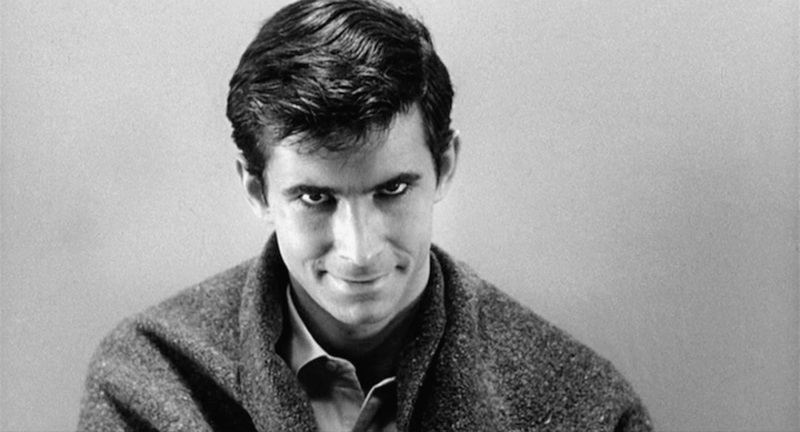
Psycho (1960)

Psycho

Psycho is a 1960 American psychological horror film directed and produced by Alfred Hitchcock, and written by Joseph Stefano, starring Anthony Perkins, Janet Leigh, John Gavin, Vera Miles and Martin Balsam, and was based on the 1959 novel of the same name by Robert Bloch. The film centers on the encounter between a secretary, Marion Crane (Leigh), who ends up at a secluded motel after stealing money from her employer, and the motel's disturbed owner-manager, Norman Bates (Perkins), and its aftermath. When originally made, the film was seen as a departure from Hitchcock's previous film North by Northwest, having been filmed on a low budget, with a television crew and in black and white. Psycho initially received mixed reviews, but outstanding box office returns prompted reconsideration which led to overwhelming critical acclaim and four Academy Award nominations, including Best Supporting Actress for Leigh and Best Director for Hitchcock. Psycho is now considered one of Hitchcock's best films and praised as a work of cinematic art by international film critics and film scholars. Ranked among the greatest films of all time, it set a new level of acceptability for violence, deviant behavior and sexuality in American films, and is widely considered to be the earliest example of the slasher film genre. After Hitchcock's death in 1980, Universal Studios began producing follow-ups: three sequels, a remake, a television film spin-off, and a prequel TV series. In 1992, the US Library of Congress deemed the film "culturally, historically, or aesthetically significant" and selected it for preservation in the National Film Registry.

Plot


During a lunchtime tryst in Phoenix, Arizona, a real estate secretary named Marion Crane discusses with her boyfriend, Sam Loomis, how they cannot afford to get married because of Sam's debts. After lunch, Marion returns to work, where a client drops off a $40,000 ($323,824.52 when adjusted for inflation) cash payment on a property. Her boss asks her to deposit the money in the bank, and she asks if she can take the rest of the afternoon off. Returning home, she begins to pack for an unplanned trip, deciding to steal the money and give it to Sam in Fairvale, California. She is seen by her boss on her way out of town, which makes her nervous. During the trip, she pulls over on the side of the road and falls asleep, only to be awakened by a state patrol officer. He is suspicious about her nervous behavior but allows her to drive on. Shaken by the encounter, Marion stops at an automobile dealership and trades in her Ford Mainline, with its Arizona license plates, for a Ford Custom 300 that has California tags. Her transaction is all for naught—the highway patrolman sees her at the car dealership and witnesses her purchase of the newer car. Driving on, Marion encounters a sudden rainstorm and decides to stop for the night at the Bates Motel; the proprietor, Norman Bates, invites her to a light dinner after she checks in. She accepts, but then hears an argument between Norman and his mother about bringing a woman into her house. They eat in the motel parlor, where he tells her about his hobby of taxidermy and his life with his mother, who is mentally ill and forbids him to have a life outside of her. Returning to her room, Marion decides to go back to Phoenix to return the stolen money. She prepares to take a shower, unaware that Norman is spying on her. As she is showering, a shadowy female figure suddenly comes in and stabs her to death with a chef's knife. Norman discovers the murder and meticulously cleans up the crime scene, putting Marion's corpse and her possessions—including the embezzled money—into the trunk of her car and sinking it in the swamps near the motel. A week later, Marion's sister Lila arrives in Fairvale and confronts Sam about the whereabouts of her sister. A private investigator named Arbogast approaches them and confirms that Marion is wanted for stealing the $40,000 from her employer. He eventually comes across the Bates Motel, where Norman's behavior arouses his suspicions. After hearing that Marion had met with Norman's mother, he asks to speak with her, but Norman refuses. Arbogast calls Lila and Sam, informing them of what he has discovered and saying he intends to speak with Norman's mother. He goes to the Bates' home in search of her; as he reaches the top of the stairs, Mrs. Bates suddenly appears from the bedroom and murders him. When Lila and Sam do not hear from Arbogast, they go to the local sheriff, who informs them that Mrs. Bates has been dead for ten years; she had killed herself and her lover. Concerned, Lila and Sam make their way to the motel. Norman takes his unwilling mother from her room, telling her he needs to hide her for a while in the fruit cellar. At the motel, Lila and Sam meet Norman. Sam distracts him by striking up a conversation while Lila sneaks up to the house. When Norman eventually realizes what they want, he knocks Sam out and rushes to the house. Lila sees Norman approaching and attempts to hide by going down steps that lead to a cellar. There she finds Mrs. Bates sitting in a chair. Lila turns her around and discovers that she is in fact a mummified corpse. Lila screams as a figure comes running into the cellar: Norman, holding a chef's knife and wearing his mother's clothes and a wig. Before Norman can attack Lila, Sam, having regained consciousness, subdues him. At the local courthouse, a psychiatrist explains that Norman had murdered Mrs. Bates and her lover 10 years prior out of jealousy. Before, they had been living an isolated life together after his father's death, until she met this new man. Unable to bear the guilt, he exhumed her corpse and began to treat it as if she were still alive. In order to preserve that illusion, he recreated his mother in his own mind as an alternate personality, often dressing in her clothes and talking to himself in her voice. The "Mother" personality is as jealous and possessive as the real Mrs. Bates had been: Whenever Norman feels attracted to another woman, "Mother" flies into a rage and kills her. As "Mother", Norman had killed two missing girls prior to Marion, as well as Arbogast. The psychiatrist then says the "Mother" personality has taken permanent hold of Norman's mind. While Norman sits in a holding cell, Mrs. Bates' voice is heard protesting that the murders were Norman's doing and that she "wouldn't even harm a fly." Meanwhile, Marion's car is pulled out of the swamp.

From Wikipedia, the free encyclopedia - https://en.wikipedia.org/wiki/Psycho_(1960_film)

Memento (2000)

Memento

Memento is a 2000 American neo-noir psychological thriller film directed and written by Christopher Nolan, and produced by Suzanne and Jennifer Todd. The film's script was based on a pitch by Jonathan Nolan, who later wrote the story "Memento Mori" from the concept. It stars Guy Pearce, Carrie-Anne Moss, and Joe Pantoliano. Pearce stars as a man who, as a result of a past trauma, suffers from anterograde amnesia, the inability to form new memories and suffers short-term memory loss approximately every five minutes. He is searching for the persons who attacked him and killed his wife, using an intricate system of Polaroid photographs and tattoos to track information he cannot remember. Memento is presented as two different sequences of scenes interspersed during the film: a series in black-and-white that is shown chronologically, and a series of color sequences shown in reverse order (simulating for the audience the mental state of the protagonist). The two sequences "meet" at the end of the film, producing one complete and cohesive narrative. Memento premiered on September 5, 2000, at the Venice International Film Festival and was released in European theaters starting in October. It became a blockbuster success, being acclaimed by critics who praised its nonlinear narrative structure and motifs of memory, perception, grief, and self-deception, and earning $39.7 million over a $9 million budget. It received numerous accolades, including Academy Award nominations for Best Original Screenplay and Best Film Editing.The film was subsequently ranked one of the best films of its decade by several critics and media outlets.

Plot


The film starts with the Polaroid photograph of a dead man. As the sequence plays backwards the photo reverts to its undeveloped state, entering the camera before the man is shot in the head. A series of black and white sequences begin with Leonard Shelby, an insurance investigator, in a motel room speaking to an unseen and unknown caller. Leonard has anterograde amnesia and is unable to store recent memories, the result of an attack by two men. Leonard explains that he killed the attacker who raped and strangled his wife, but a second clubbed him and escaped. The police did not accept that there was a second attacker, but Leonard believes the attacker's name is John or James, with a last name starting with G. Leonard conducts his own investigation using a system of notes, Polaroids, and tattoos. From his occupation, Leonard recalls a fellow anterograde amnesiac: Sammy Jankis. Sammy's diabetic wife, who wasn't sure if his condition was genuine, repeatedly requested insulin; she hoped that he would remember having given her an injection and stop himself from giving another before she died of an overdose. However, Sammy continues to administer the injections, and his wife falls into a fatal coma. Afterwards, color sequences are shown reverse-chronologically. In the story's chronology, Leonard self-directively gets a tattoo of John G's license plate. Finding a note in his clothes, he meets Natalie, a bartender who resents Leonard as he wears the clothes and drives the car of her boyfriend, Jimmy Grantz. After understanding his condition, she uses it to get Leonard to drive a man named Dodd out of town and offers to run the license plate as a favor. Meanwhile, Leonard meets with a contact, Teddy, who helps with Dodd, but warns about Natalie. However, a photograph instigates Leonard not to trust him. Natalie provides Leonard the driver's license for a John Edward Gammell, Teddy's full name. Confirming Leonard's information on "John G" and his warnings, Leonard drives Teddy to an abandoned building, leading to the opening. In the final black-and-white sequence, prompted by the caller, Leonard meets with Teddy, an undercover officer, who has found Leonard's "John G," Jimmy, and directs Leonard to the abandoned building. When Jimmy arrives, Leonard strangles him and takes a photo of the body. As it develops, the black-and-white transitions to the final color sequences. Leonard swaps clothes with Jimmy, hearing him whisper "Sammy." As Leonard has only told Sammy's story to those met, he doubts Jimmy's role. Teddy arrives and asserts that Jimmy was John G, but when Leonard is undeterred, Teddy reveals that he helped him kill the real attacker a year ago, and he has been using Leonard ever since. Teddy points out that since "John G" is common, he will cyclically forget and begin again and that even Teddy himself has a "John G" name. Further, Teddy claims that Sammy's story is Leonard's himself, repressing the memory to escape guilt. After hearing Teddy's exposition, Leonard consciously burns Jimmy's photograph, writes a message to himself on Teddy's photograph to not trust Teddy, and drives off in Jimmy's car. He has Teddy's license plate number tattooed as the second attacker, leading to his eventual death.

From Wikipedia, the free encyclopedia - https://en.wikipedia.org/wiki/Memento_(film)

Fight Club (1999)

Fight Club

Fight Club is a 1999 American film based on the 1996 novel of the same name by Chuck Palahniuk. The film was directed by David Fincher, and stars Brad Pitt, Edward Norton and Helena Bonham Carter. Norton plays the unnamed protagonist, referred to as the narrator, who is discontented with his white-collar job. He forms a "fight club" with soap maker Tyler Durden, played by Pitt, and they are joined by men who also want to fight recreationally. The narrator becomes embroiled in a relationship with Durden and a dissolute woman, Marla Singer, played by Bonham Carter. Palahniuk's novel was optioned by 20th Century Fox producer Laura Ziskin, who hired Jim Uhls to write the film adaptation. Fincher was one of four directors the producers considered, and was selected because of his enthusiasm for the film. Fincher developed the script with Uhls and sought screenwriting advice from the cast and others in the film industry. The director and the cast compared the film to Rebel Without a Cause (1955) and The Graduate (1967). Fincher intended Fight Club's violence to serve as a metaphor for the conflict between a generation of young people and the value system of advertising. The director copied the homoerotic overtones from Palahniuk's novel to make audiences uncomfortable and keep them from anticipating the twist ending. Studio executives did not like the film and restructured Fincher's intended marketing campaign to try to reduce anticipated losses. Fight Club failed to meet the studio's expectations at the box office and received polarized reactions from critics, who debated the explicit violence and moral ambiguity, but praised the acting, directing, themes and messages. It was cited as one of the most controversial and talked-about films of 1999. The film later found critical and commercial success with its DVD release, which established Fight Club as a cult film.

PLOT


The unnamed Narrator (Edward Norton) is a traveling automobile recall specialist who suffers from insomnia. One night, he visits a support group for testicular cancer victims, where they assume that he, too, is a victim, and he spontaneously weeps into the nurturing arms of another man, finding a "freedom" that relieves his insomnia. He becomes addicted to participating in support groups of various kinds, always allowing the groups to assume that he suffers what they do. However, he begins to notice another impostor, Marla Singer (Helena Bonham Carter), whose presence disturbs his bliss. The two negotiate to avoid their attending the same groups, but, before going their separate ways, Marla gives the Narrator her phone number. On a flight home from a business trip, the Narrator meets Tyler Durden (Brad Pitt), a soap salesman with whom he begins to converse after noticing the two share the same kind of briefcase. After the flight, the Narrator returns home to find that his apartment has been demolished by an explosion. He calls Tyler and they meet at a bar. A conversation about consumerism leads to the Narrator moving into Tyler's dilapidated house. Outside the bar, Tyler requests that the Narrator hit him, which leads the two to engage in a fistfight. They have further fights outside the bar on subsequent nights, and these fights attract growing crowds of men. The fighting eventually moves to the bar's basement where the men form a "fight club," a routine opportunity for the men to fight recreationally. Marla overdoses on pills and telephones the Narrator for help; he ignores her, but Tyler answers the call and saves her. Tyler and Marla become sexually involved, and Tyler warns the Narrator never to talk to Marla about him. More fight clubs form across the country and, under Tyler's leadership, they become the anti-materialist and anti-corporate organization called "Project Mayhem." The Narrator complains to Tyler that he wants to be more involved in the organization, but then Tyler suddenly disappears. When a member of Project Mayhem is killed by the police during a botched sabotage operation, the Narrator tries to shut down the project, and follows evidence of Tyler's national travels to track him down. In one city, a Project member greets the Narrator as Tyler Durden. The Narrator calls Marla from his hotel room and discovers that Marla also believes him to be Tyler. He suddenly sees Tyler in his room, and Tyler reveals that they are dissociated personalities in the same body. When the Narrator has believed himself to be asleep, Tyler has been controlling his body and travelling to different locations. The Narrator blacks out after the conversation, and when he awakes, he uncovers Tyler's plans to erase debt by destroying buildings that contain credit card companies' records. The Narrator tries to contact the police, but finds that the officers are members of the Project. He attempts to disarm the explosives in a building, but Tyler subdues him and moves him to the uppermost floor. The Narrator, held at gunpoint by Tyler, realizes that, in sharing the same body with Tyler, he himself is actually holding the gun. He fires it into his mouth, shooting through the cheek without killing himself. Tyler collapses with an exit wound to the back of his head, and the Narrator stops mentally projecting him. Afterward, Project Mayhem members bring a kidnapped Marla to him, believing him to be Tyler, and leave them alone. The explosives detonate, collapsing many buildings around them; the Narrator and Marla, holding hands, look on.

From Wikipedia, the free encyclopedia - https://en.wikipedia.org/wiki/Fight_Club